Topic: The (Im-?)Possibility of a Neutrino Laser
Many analogies exist between neutrino physics and optics because the neutrino is a nearly massless particle whose feeble interactions with its environment permit coherent quantum effects. However, it is only relatively recently that we have begun to explore the potential of quantum phenomena in neutrino physics, with neutrino oscillations and coherent elastic neutrino-nucleus scattering as prominent examples. Superradiance — which emerges from collective spontaneous emission in optically pumped gases — may also have a parallel counterpart in neutrino physics.
In this talk, Dr. Formaggio will discuss some of these analogies and introduce a new — and highly speculative — concept of superradiant neutrino emission from a radioactive Bose-Einstein condensate, which could form the basis for a superradiant neutrino laser.
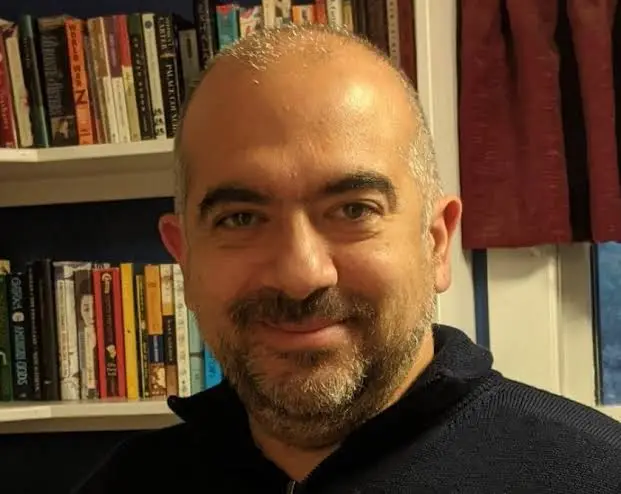
Speaker: Dr. Joseph Formaggio
Joseph Formaggio in an experimental nuclear physicist whose work has focused on understanding the fundamental properties of neutrinos. His previous work on the Sudbury Neutrino Observatory helped shed light on the “solar neutrino problem”, which helped to firmly establish that neutrinos have mass. His subsequent work, which continues to this day, builds on this discovery and hopes to shed light on the nature and scale of the mass of the neutrino. He is a member of the KATRIN and Project 8 experiments, which use the process of tritium beta decay —originally proposed by Enrico Fermi— to measure the mass of the neutrino directly.
Formaggio’s group develops novel detector technologies and techniques to better understand the properties of neutrinos and other rare and exotic particles. The group developed the technique of cyclotron radiation emission spectroscopy to accurately measure the energy of electrons emitted in beta decay; a technique now used by the Project 8 experiment. The Formaggio group is also developing new cryogenic bolometers to better understand neutrino interactions at extremely low energies. Such detectors are part of the upcoming Ricochet experiment, which aims to study the process of coherent neutrino scattering using neutrinos created in nuclear reactors. More recently, the group has been exploring the potential role of quantum sensors and quantum readout systems for the purpose of detecting neutrinos and other weakly interacting particles.
You can register for this talk here.