
Topic: Homestake to SURF: (1) The Early Days, (2) Thinking Beyond DUNE
Speaker: Jose Alonso
Abstract: This talk will be in two parts: first reminiscences of Jose Alonso’s days as the first Lab Director of SURF, and some of the adventures of reopening the Homestake gold mine and launching the new science laboratory; then some observations regarding new facilities and research tools that will provide SURF with truly unique world-leading capabilities for studying some of the Universe’s deepest questions. Folding in the plans SURF is developing for new caverns in an expanded Ross Campus, with the possibility of Theia, a new multi-kiloton detector using water-based liquid scintillator deployed in one of these new caverns, this campus will provide a diverse set of detection technologies of unprecedented size and sensitivity capable of probing different detection pathways for both the long-baseline beam from Fermilab, as well as local sources of neutrinos. For the latter, SURF would install in a separate new cavern in the same Ross Campus, compact accelerators capable of producing intense fluxes of neutrinos — and possibly other BSM (Beyond-Standard-Model) particles — from DAR (Decay-At-Rest) sources generated by megawatt-level proton beams. IsoDAR Collaboration's plans are quite mature now for the deployment of a compact 60 MeV cyclotron, generating a 600 kW proton beam, and its installation adjacent to a planned 2.4 kiloton liquid scintillator detector at Yemilab, a new underground laboratory in South Korea. This beam will flood a sleeve of Li-7 with neutrons from the beryllium target, producing an intense flux of electron antineutrinos from Li-8 decay. A complex is envisioned at SURF with a second generation of this accelerator and target, with huge sensitivity gains resulting from the massive installed detector capabilities. The IsoDAR cyclotron can in addition be used as the injector for a larger, 800 MeV compact cyclotron, first proposed for the DAEdALUS project in the early days of DUSEL (SURF). This larger machine would provide 8 MW of protons on a carbon target, in an energy range ideally suited for pion production, below the kaon threshold, yielding a clean and well-understood spectrum of neutrinos. This source, coupled with SURF's detectors will provide more than an order of magnitude higher sensitivity over the existing pion DAR experiments: JSNS2 at JPARC in Japan, CCM at LANSCE in Los Alamos, and Coherent in the “neutrino alley” at the SNS at Oak Ridge. This accelerator complex would be deployed in a separate cavern, designed to contain the activation products associated with high-power accelerators, and located in close proximity to both the LBNF and Theia caverns. Jose Alonso proposes that exploring the physics opportunities of these intense sources of neutrinos, both local and distant, with the enormous detection capabilities, be the topic of one or more future workshops which would undoubtedly build a very strong case for these programs, extending beyond the original scope of DUNE.
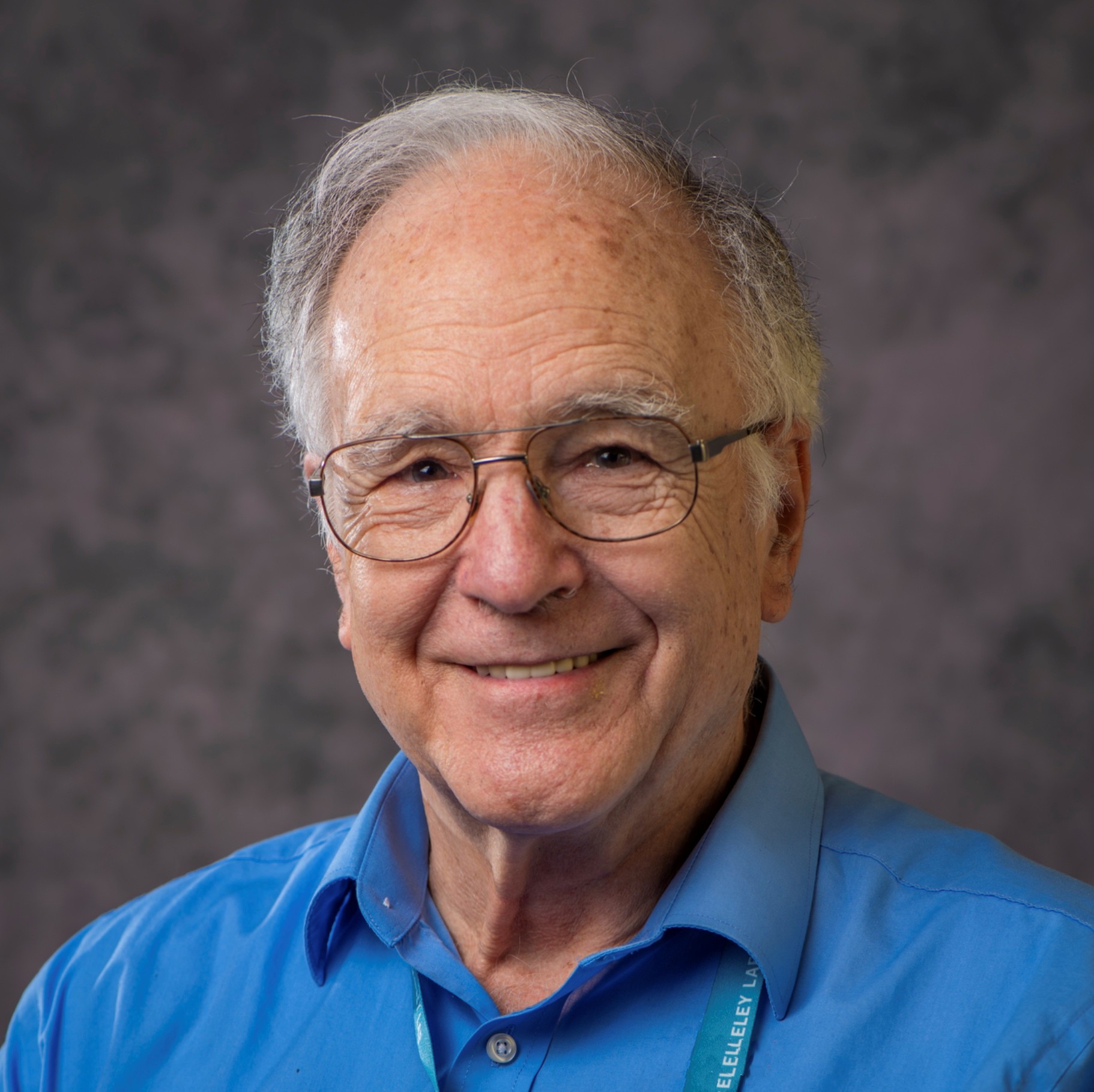
Bio: With freshly-minted PhD’s in Nuclear Physics from MIT, and after a brief Postdoc stay at Yale, Carol and Jose Alonso headed West in 1972 to the Lawrence Berkeley National Lab to work with Glenn Seaborg and his team specializing in heavy-element discoveries. After successfully finding Element 106 (seaborgium) they settled into careers at LBNL (Jose) and Livermore (LLNL) for Carol. Jose, in the Accelerator Division at Berkeley during the 1980’s, directed the operations of the Lab’s family of world-leading accelerators, pioneering new fields in relativistic heavy ion nuclear physics and cancer treatments with accelerator beams. Today he is still very much involved with the medical application of accelerator beams for external-beam radiotherapy and the production of radioisotopes for PET scanning and targeted radiotherapy.
After retiring from LBNL in 2002, he spent 5 years commuting to CERN working on the ATLAS detector, then served as the first Laboratory Director of SURF, reopening the Homestake mine and preparing the 4850 level for Science. Then for the last 15 years he has been working with neutrino physicist Janet Conrad and her MIT group in designing an advanced neutrino experiment based on a new generation of high-power cyclotrons the group is developing. The experiment will be deployed adjacent to a new kiloton-scale liquid scintillator detector, in the new underground Lab in South Korea called Yemilab. But dreams are that a second generation of this experiment may find its way into SURF.
You may register for this talk here.